


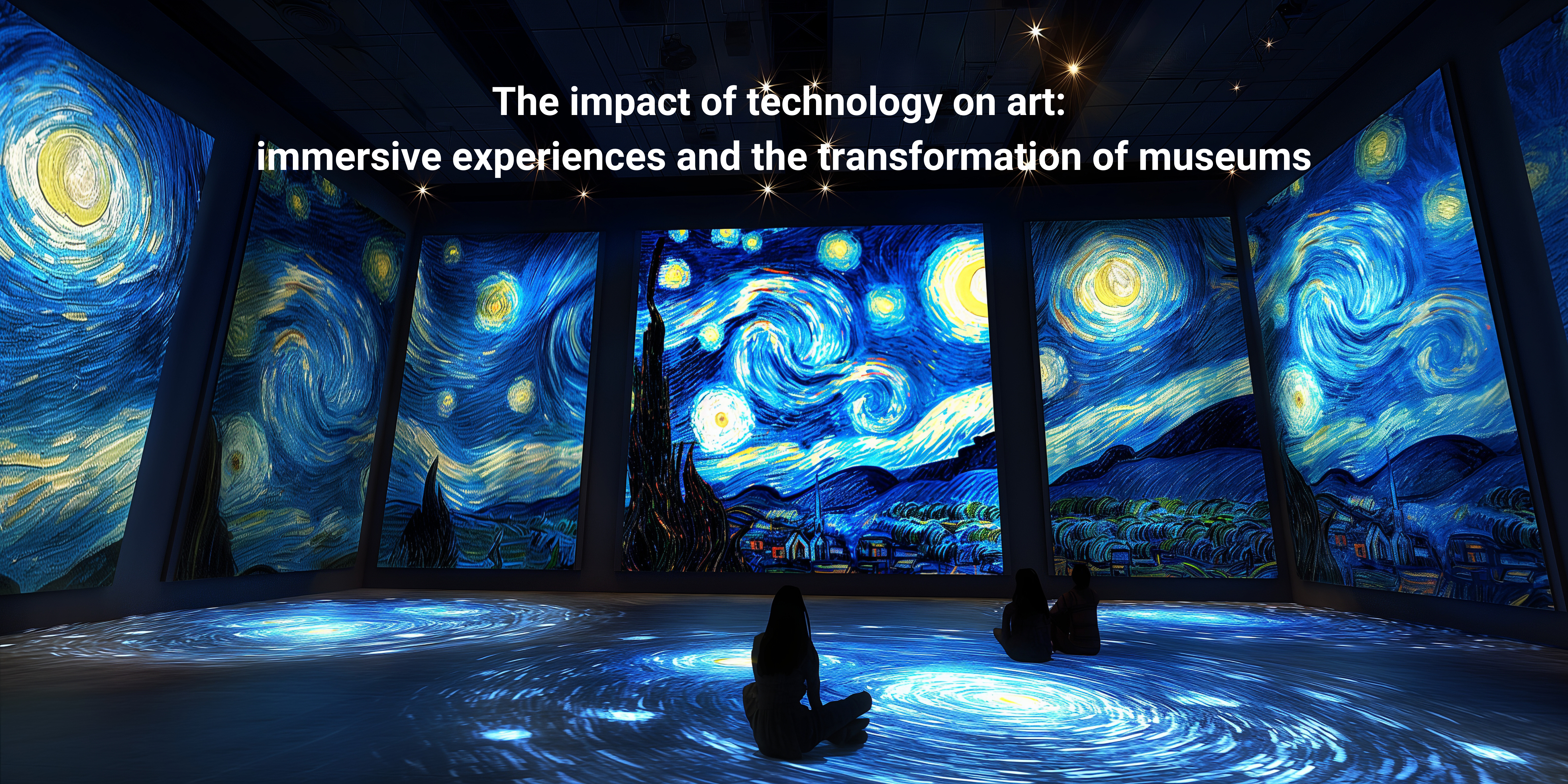
Technology and Art: A Digital Transformation
Technology has become an integral part of everyday life, influencing the way we perceive art. In recent decades, art has begun to integrate LED displays, digital projectors, virtual reality (VR) and augmented reality (AR), changing the way audiences interact with works of art. This digitization is influencing both modern and classical art, offering interactive and immersive experiences for visitors.
Modern Art and Immersive Technologies
High-resolution LED displays allow artwork to be presented on a large scale, with impressive clarity. Integrated digital projectors with professional sound create multi-sensory experiences, transforming a visit to the museum into an interactive adventure. Immersive exhibitions allow the details of the artwork to be viewed in a way that goes beyond physical limits, and subtle details, such as textures or color nuances, are highlighted through dynamic projections.
Studies show that 79% of visitors are interested in digital experiences in museums, and 77% would use VR or AR to access collections that are not accessible to the general public (University of Glasgow, 2025). This engagement increases satisfaction and increases the intention to return and recommend the museum to others.
Classical art and interactive presentation
Augmented reality (AR) allows the addition of interactive layers on top of traditional works, providing explanations about the historical context or the artist’s techniques. The technology allows for the visualization of restorations and original versions of damaged works, creating a stronger and more immersive emotional experience for visitors.
The Impact of Technology on Visitors and the Museum Experience
Exhibitions that combine VR, AR, and interactive projections significantly increase visitor numbers. For example, the immersive exhibition at the Musée d’Orsay attracted 18,000 visitors in its first five months (Museums Association, 2025). Visitors who experience immersive exhibitions spend more time in the museum and are more likely to return (Springer, 2025).
Technology as a Tool for Understanding and Participation
VR and AR enable the exploration of art in an interactive and multisensory way, transforming the museum from a passive space to an active place of exploration. Visitors become participants, engaging in the discovery of the story and artistic technique, which increases audience satisfaction and loyalty.
Technology in art is bringing about an innovative transformation, reimagining both modern and classical art. Immersive experiences increase visitor satisfaction, engagement, and museum attendance. Museums that adopt VR, AR, and other interactive technologies become more engaging, accessible, and educational, strengthening the connection between the public and cultural heritage.
Frequently Asked Questions
1. How can high-resolution LED displays help a museum?
LED displays allow for the presentation of large-scale works of art in impressive detail. The museum can highlight textures, colors, and elements that are difficult to see in physical format, providing visitors with a premium visual experience and increasing the attractiveness of exhibitions.
2. What are the benefits of digital projectors integrated with professional audio systems?
They allow for the creation of a multi-sensory atmosphere, combining image and sound to transform exhibitions into immersive experiences. The museum can visually and audibly reproduce the history of a work, which amplifies the emotional impact on visitors.
3. How can immersive exhibitions increase visitor numbers?
Immersive exhibitions attract visitors through immersive experiences that simultaneously involve sight, hearing and other senses. This approach transforms a museum visit from a simple observation into a memorable and emotional experience. The public is more motivated to participate, return and recommend the event to others. In addition, the “shareable” nature of interactive exhibitions, visible on social networks, contributes to increasing visibility and, implicitly, the number of visitors.
4, How can AR (augmented reality) improve the presentation of classical art?
AR adds information on top of classical works without physically modifying them: explanations, reconstructions, virtual restorations. The museum can provide a deeper understanding of the historical and artistic context, making traditional works more accessible to a young and digitally oriented audience.
5. How does VR (virtual reality) help museums present collections that are difficult to access?
VR allows visitors to explore spaces or collections that cannot be physically exhibited. The museum can offer virtual tours, 3D reconstructions, or access to works in storage, increasing the educational value without requiring the physical display of fragile pieces.
6. What is the impact of combining VR, AR, and interactive projections on the visitor experience?
The combination of these technologies transforms the visit into an active, not passive, experience. Visitors become explorers of the story, which increases satisfaction, engagement, and the willingness to recommend the museum to others.
7. How do digital solutions contribute to the modernization and attractiveness of the museum?
Digital solutions make the museum more relevant, more interactive, and more accessible to modern generations. They combine education with technology, increasing the visibility of the institution, its reputation, and its ability to attract new audiences.

Comments